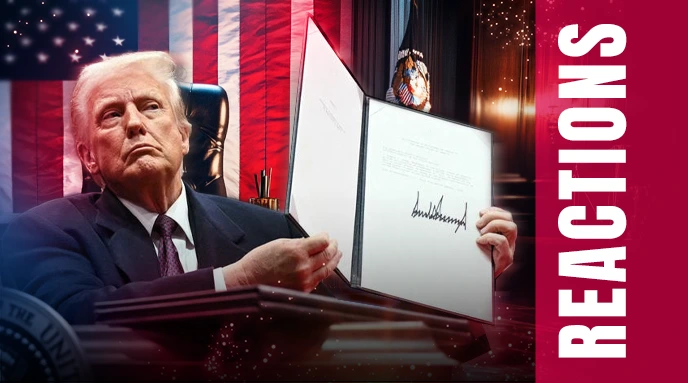
Trump signed his first crypto executive order within days of taking office in January 2025. That was just the beginning. Since then, the administration has issued at least two more landmark orders: one establishing a Strategic Bitcoin Reserve in March 2025, and another in May 2026 directing federal regulators to open payment-system access to crypto and fintech firms. This article covers all three.
Whether you hold Bitcoin, run a fintech, or just want to know what Washington is doing with digital assets, the policy shift is significant enough to pay attention to.
Trump’s Three Major Crypto Executive Orders
👉 Quick takeaway: Three executive orders define the Trump administration’s crypto framework: EO 14178 revoked the Biden-era approach and banned CBDC development, the Strategic Bitcoin Reserve EO created a government BTC holding, and EO 14405 directed regulators to reduce fragmentation and expand crypto access to payment systems.
| Order | Date | Key Action |
|---|---|---|
|
EO 14178 Strengthening American Leadership in Digital Financial Technology |
January 23, 2025 |
Revoked Biden crypto EO; banned CBDC development; established Presidential Working Group on Digital Asset Markets; protected right to write and deploy code 🏆 Foundational order setting the new U.S. crypto policy direction |
| Strategic Bitcoin Reserve EO | March 6, 2025 |
Created a U.S. Strategic Bitcoin Reserve and a separate Digital Asset Stockpile using assets forfeited in federal cases 🏆 First U.S. government Bitcoin reserve established |
|
EO 14405 Integrating Financial Technology Innovation into Regulatory Frameworks |
May 19, 2026 |
Directed federal financial regulators to reduce fragmentation and expand payment-system access for crypto and fintech firms 🏆 Most recent order; directly affects payment-system access |
#1 – The Freedom to Transact and Write Code
Section 1 of EO 14178 is a direct win for developers. It protects the right to write, deploy, and use software on public blockchain networks without fear of prosecution based solely on the nature of the code. That protection matters in practice. Tornado Cash co-founder Roman Storm faced federal money-laundering charges for building an open-source privacy protocol.
The January 2025 order signals that the U.S. government intends to draw a clearer line between building tools and being responsible for how others misuse them. The order also protects the right of individuals to self-custody their digital assets and to transact with them peer-to-peer. For developers, this is the most concrete legal protection the U.S. government has ever put in writing for permissionless software.
#2 – USD Stablecoins Just Got a Major Win

Trump’s crypto executive order is HUGE for stablecoins.
That’s thanks to this section in particular, which emphasizes the importance of:
“promoting and protecting the sovereignty of the United States dollar, including through actions to promote the development and growth of lawful and legitimate dollar-backed stablecoins worldwide”
In other words, it promotes the development and growth of lawful and legit dollar-backed stablecoins.
The order does not name specific stablecoins or issuers. Regulatory clarity on what qualifies as ‘lawful and legitimate’ will come from follow-on agency guidance and, potentially, from stablecoin-specific legislation moving through Congress as of 2026.
In the meantime, dollar-backed stablecoins with transparent reserves and clear redemption mechanisms are best positioned to meet whatever standard emerges.
#3 – Clearer Regulation Is Coming
U.S. crypto regulation before 2025 was a patchwork. No single agency had clear authority. The SEC, CFTC, FinCEN, and Treasury each claimed jurisdiction over different parts of the market, and the lines between them were disputed in court. That uncertainty had a direct cost: major financial institutions delayed crypto product launches, and several high-profile enforcement actions were settled rather than litigated because the legal outcome was genuinely unclear.
EO 14178 promised technology-neutral regulations and transparent, well-defined jurisdictional boundaries. EO 14405 in May 2026 pushed that further by directing regulators to actively reduce fragmentation across agencies. The framework is still being built. But the direction has shifted from enforcement-first to integration-first.
Fortunately, this section of the executive order promises new guidelines with a focus on
“providing regulatory clarity and certainty built on technology-neutral regulations, frameworks that account for emerging technologies, transparent decision making, and well-defined jurisdictional regulatory boundaries, all of which are essential to supporting a vibrant and inclusive digital economy and innovation in digital assets, permissionless blockchains, and distributed ledger technologies”
#4 – Banning Central Bank Digital Currencies
Central Bank Digital Currencies (CBDCs) are one of the greatest ongoing threats to our freedoms — and they’re being “explored” in as many as 134 countries.
In addition to misusing the underlying technology behind crypto to serve as the very thing that the crypto movement was designed to oppose, CBDCs present massive concerns for everyday citizens.
Think tanks like the Cato Institute, for instance, have flagged that CBDCs could enable the unprecedented surveillance of citizens by governments through transaction tracking.
The systemic risks are real and specific. A government-issued digital currency that runs on state-controlled infrastructure gives the issuing authority visibility into every transaction. The Cato Institute has documented how this enables a surveillance capability with no historical precedent in U.S. financial regulation.
Traditional banks also face a structural threat: if citizens can hold dollars directly at the Fed through a CBDC, deposit outflows from commercial banks become a genuine risk during any period of stress. That is not a hypothetical. Several central banks running CBDC pilots have already imposed individual holding limits specifically to prevent bank runs.
The order states its intent to:
“[take] measures to protect Americans from the risks of Central Bank Digital Currencies (CBDCs), which threaten the stability of the financial system, individual privacy, and the sovereignty of the United States, including by prohibiting the establishment, issuance, circulation, and use of a CBDC within the jurisdiction of the United States”
#5 – A New Working Group For Crypto and AI
The Presidential Working Group on Digital Asset Markets operates within the National Economic Council. Its mandate is digital asset policy, not artificial intelligence. The two topics share an executive-order environment in this administration, but the Working Group itself is focused entirely on crypto and digital finance regulation.
Since January 2025, the group has informed subsequent actions including the Strategic Bitcoin Reserve order in March 2025 and the FinTech integration framework in May 2026. Think of it as the institutional engine behind the administration’s evolving crypto stance.
#6 – The Strategic Bitcoin Reserve: The U.S. Government Starts Holding Bitcoin
On March 6, 2025, Trump signed an executive order establishing the Strategic Bitcoin Reserve and a separate U.S. Digital Asset Stockpile. This is a significant shift. For the first time, the federal government formally committed to holding Bitcoin as a strategic asset, not just as seized property waiting to be auctioned off.
Here is how the two programs differ:
- Strategic Bitcoin Reserve: Holds Bitcoin seized through federal criminal and civil forfeiture proceedings. The government will not sell these holdings. The order treats Bitcoin as a long-term reserve asset, similar in concept to the Strategic Petroleum Reserve.
- U.S. Digital Asset Stockpile: Holds other digital assets acquired through forfeiture. Unlike the Bitcoin Reserve, these assets may be managed more actively and could be sold or deployed under Treasury direction.
The practical implication for the market is straightforward. The U.S. government removing seized Bitcoin from the potential auction pipeline reduces expected sell-side pressure. How large that effect is depends on the total volume of Bitcoin held in federal custody, which the Treasury has not published with full precision as of mid-2026.
#7 – EO 14405: Opening the Financial System to Crypto Firms (May 2026)
The most recent major order, signed May 19, 2026, targets a problem crypto companies have complained about for years: being locked out of basic banking and payment infrastructure.
Executive Order 14405 directs federal financial regulators to reduce regulatory fragmentation and expand access to payment systems for fintech and digital-asset firms. Two specific objectives stand out.
First, the order pushes toward giving crypto firms access to Federal Reserve payment rails. That would allow qualifying companies to settle transactions through the same infrastructure used by traditional banks, a capability previously denied to most crypto-native businesses.
Second, the order addresses debanking. Banks have routinely closed accounts or refused services to crypto companies, citing regulatory risk. EO 14405 signals that this practice should be curtailed, aligning with a broader administration posture against financial discrimination toward crypto entities.
Norton Rose Fulbright’s analysis of the order notes that it directs regulators to modernize oversight frameworks rather than prescribing specific rule changes, meaning implementation will play out over months of agency rulemaking. The direction is clear. The timeline is not.
What This Means For You: A Quick Decision Framework
Not every order affects every crypto participant the same way. Here is a fast-read breakdown by audience.
If you are a crypto developer or builder: EO 14178’s code-protection provisions are the most directly relevant. The order does not grant legal immunity, but it signals that the administration does not intend to prosecute developers for building permissionless tools. Watch agency guidance from the DOJ and SEC for how this plays out in practice.
If you hold Bitcoin: The Strategic Bitcoin Reserve matters most. The federal government is now formally a Bitcoin holder that has committed not to sell its holdings. That removes one source of downward price pressure from the market. It does not guarantee price appreciation.
If you run a crypto or fintech business: EO 14405 is the order to track. Payment rail access and anti-debanking provisions directly affect your ability to operate. Implementation depends on agency rulemaking, which Norton Rose Fulbright estimates will unfold over months. Engage legal counsel familiar with federal financial regulation now, not after rules are finalized.
If you are outside the U.S.: U.S. stablecoin promotion (EO 14178) has global reach. Dollar-backed stablecoins issued by U.S.-compliant entities may gain regulatory advantages in cross-border markets as other countries watch Washington’s lead.
Frequently Asked Questions
Does EO 14178 override existing SEC enforcement actions against crypto projects?
No. Executive orders direct agency behavior going forward and signal policy priorities. They do not retroactively vacate pending enforcement cases. The SEC retains authority over existing proceedings unless Congress or courts intervene.
Is the Strategic Bitcoin Reserve funded by taxpayer money?
No. The reserve is funded by Bitcoin already held by the federal government through criminal and civil asset forfeiture. No new appropriation was made to purchase Bitcoin on the open market.
What is the CBDC ban’s legal standing? Can a future president reverse it?
The CBDC prohibition in EO 14178 is an executive order, not a statute. A future president can reverse it by issuing a new executive order. Congress could also pass legislation either cementing or overturning the ban.
When will EO 14405’s payment-rail provisions take effect?
The order directs regulators to modernize frameworks, but it does not set a hard deadline for specific rule changes. Agency rulemaking typically takes six to eighteen months after a directive is issued. Full implementation is unlikely before late 2026 or 2027.
Connor

Connor is a US-based digital marketer and writer. He has a diverse military and academic background, but developed a passion over the years for blockchain and DeFi because of their potential to provide censorship resistance and financial freedom. Connor is dedicated to educating and inspiring others in the space, and is an active member and investor in the Ethereum, Hex, and PulseChain communities.