In early 2025, the SEC launched its Crypto Task Force under Acting Chair Mark Uyeda. Commissioner Hester Peirce took the lead. The goal was direct: replace years of enforcement-first crypto regulation with a clear, written rulebook.
More than a year later, the task force has held five public roundtables, published ongoing meeting notes through June 2026, and issued its first formal interpretations on how to classify crypto assets as securities or commodities. The work is still in progress. But the shift in approach is no longer theoretical.
What Is the SEC Crypto Task Force?
The task force was formally established under Acting SEC Chair Mark Uyeda in early 2025 and is led by Commissioner Hester Peirce. David Sacks serves as the White House AI and Crypto Czar — a separate advisory role focused on executive-branch crypto policy, not SEC operations. The distinction matters: Sacks sets the political direction, while Peirce runs the day-to-day regulatory work.
Why Do We Need This Task Force?
Under the Biden Administration, the crypto regulatory environment was incredibly difficult to make heads or tails of.
Biden’s Executive Order 14067, titled Ensuring Responsible Development of Digital Assets, focused primarily on “safety” to large financial systems and individual users.
Take this excerpt, for example:
“We must mitigate the illicit finance and national security risks posed by misuse of digital assets”
While this may seem like a positive sentiment, the language is so broad and all-encompassing that it can apply to almost anything.
For example, does illicit finance mean using privacy protocols? In the case of Tornado Cash, the founder was prosecuted for creating code which allowed crypto users on Ethereum to access privacy.
The term “misuse” is incredibly vague too — I’m sure the government can think of many ways that you’re misusing your own money.
A New Attitude Towards Crypto
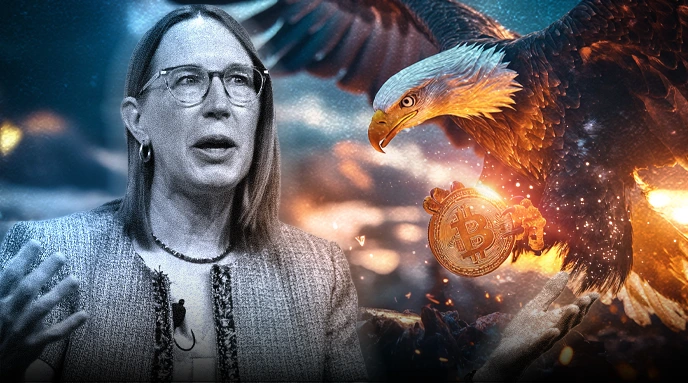
Under the previous regime, the SEC prosecuted dozens of crypto businesses and DeFi protocols using ambiguous language.
And the worst part? This regulatory ambiguity and hardcore litigation scared developers and entrepreneurs away from innovating in the industry.
One of the biggest issues in the space, for instance, was the fact the SEC constantly threatened action against crypto tokens classified as securities. But there was little-to-no insight on how securities are actually defined.
Famously, Former Commissioner Gensler would not answer if Ethereum, the second largest crypto in the world, was a security or not.
According to Peirce, who will spearhead the new SEC crypto task force:
“The [previous] Commission refused to use regulatory tools at its disposal and incessantly slammed on the enforcement brakes as it lurched along a meandering route with a destination not discernible to anyone.”
In Peirce’s first written public statement, she laid out a new way of thinking about cryptocurrency regulation in the United States.
She wants to see a clear regulatory environment where “people have great freedom to experiment and build interesting things.”
What Are the Goals of the SEC Crypto Task Force?
Commissioner Peirce published 10 specific priorities for the task force at launch. These are now the active agenda — not a draft. Each priority maps to a concrete regulatory question the task force is working to answer.
- Determine what is and is not a security.
- Create clear definitions on areas that fall outside of SEC jurisdiction.
- Provide legal relief for crypto projects and businesses that are willing to cooperate collectively with the SEC.
- Provide clarity on existing paths towards swiftly registering coins and tokens as securities.
- Amend the Special Purpose Broke Dealer No-Action Statement.
- Provide regulatory clarity for investment advisors.
- Provide regulatory clarity for staking and lending.
- Properly classify crypto-exchange related products.
- Work on the intersection of crypto and clearing agencies.
- Experiment with cross-border regulatory practices.
Of these 10 priorities, three have seen the most concrete progress as of mid-2026. The securities-vs-commodities classification question (priority 1) produced formal interpretive guidance in March 2026. The registration pathway for tokens (priority 4) has been the subject of two dedicated roundtables. Staking and lending clarity (priority 7) remains an open question with no formal guidance yet issued.
What Has the Task Force Actually Done?
The task force is no longer just a set of intentions. Since its formation, it has moved through a structured public engagement process.
Five roundtables took place in 2025. Each covered a different slice of the crypto market: securities classification, exchange registration, DeFi, tokenization, and staking. The SEC published participant lists and recorded sessions for all of them. Meeting notes continued through at least June 28, 2026.
In March 2026, the SEC issued formal interpretations on when a crypto asset qualifies as a security versus a commodity. That was the most concrete output yet. It directly addressed the jurisdictional overlap with the CFTC — the question that had paralyzed developers and legal teams for years.
The task force also opened a public submission channel at Crypto@sec.gov. Any individual or organization can submit written comments. The SEC reviews these as part of its rulemaking process.
SEC vs. CFTC: Two Task Forces, One Crypto Market
The SEC is not the only agency that built a dedicated crypto body. In March 2026, the CFTC launched its own Innovation Task Force — a formal team of staff and outside experts focused on crypto assets, AI, and autonomous trading systems.
The two bodies cover different ground. The SEC’s task force focuses on whether tokens are securities and how exchanges should register. The CFTC’s task force focuses on crypto derivatives, prediction markets, and commodities-style classification.
Here is a quick comparison:
👉 Quick takeaway: The SEC Task Force focuses on securities classification and exchange registration — most relevant to token issuers and DeFi protocols. The CFTC Innovation Task Force focuses on derivatives, AI systems, and prediction markets — most relevant to trading firms and derivatives platforms. Both are producing formal frameworks in 2026.
| SEC Crypto Task Force | CFTC Innovation Task Force | |
|---|---|---|
| Launched | Early 2025 | March 2026 |
| Led By | Commissioner Hester Peirce | CFTC Chairman Selig |
| Core Focus | Securities classification, exchange registration, staking | Crypto derivatives, AI systems, prediction markets |
| Public Input |
Crypto@sec.gov, roundtables
|
Public engagement process |
| Key 2026 Output |
Securities vs. commodities interpretations 🏆 Defines token classification for most crypto projects |
Formal innovation framework 🏆 Defines rules for derivatives and AI trading |
| Best For |
Token issuers, crypto exchanges, DeFi protocols 🏆 Most relevant to token issuers and DeFi |
Derivatives platforms, prediction markets, trading firms 🏆 Most relevant to derivatives and trading |
For most token issuers and spot exchanges, the SEC task force is the one that directly affects your registration and compliance decisions. For derivatives platforms, the CFTC body is where the relevant rules will come from.
Biden v. Trump: Crypto’s New Era
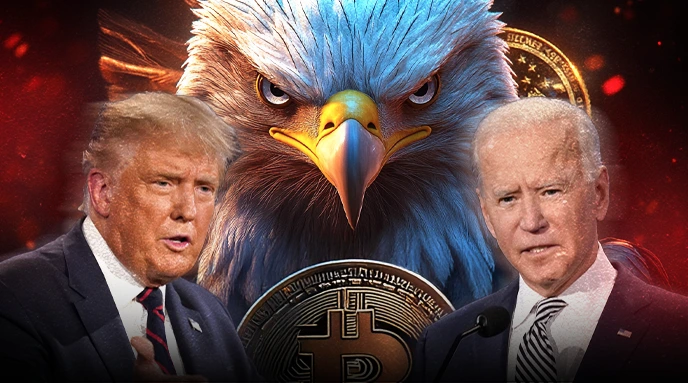
Fold the unique content from this section (the summary framing) into ‘A New Attitude Towards Crypto’ as a closing paragraph, then remove this section. The merged closing paragraph: The contrast with the Biden era is now a matter of record, not prediction.
Under the previous regime, the SEC prosecuted dozens of crypto businesses using ambiguous language and never defined what a security actually was. The current task force has held five roundtables, published interpretive guidance on securities classification, and opened a formal public comment channel. Whether that constitutes a complete turnaround is still being tested — but the operational shift is real.
How to Engage With the Task Force
The SEC built a public participation process into the task force from the start. If you run a crypto project, exchange, or legal practice, you have a direct channel to influence rulemaking.
Three ways to participate:
- Submit written comments via Crypto@sec.gov. The SEC reviews public submissions when developing interpretive guidance and formal rules. Keep submissions focused on a specific issue — securities classification, staking treatment, or exchange registration — rather than broad policy statements.
- Attend or review roundtable recordings. The SEC publishes participant lists and recorded sessions for each roundtable. Reviewing these tells you exactly which legal arguments and industry positions are already on the record.
- Monitor the meetings page. The SEC updates its task force meetings page after each session. The most recent entry as of this writing is June 28, 2026. Tracking this page is the fastest way to stay current on interpretive shifts before they become formal rules.
If your concern falls under derivatives or prediction markets, direct your submission to the CFTC’s Innovation Task Force instead.
Connor

Connor is a US-based digital marketer and writer. He has a diverse military and academic background, but developed a passion over the years for blockchain and DeFi because of their potential to provide censorship resistance and financial freedom. Connor is dedicated to educating and inspiring others in the space, and is an active member and investor in the Ethereum, Hex, and PulseChain communities.