
Clear guidelines help new industries grow, and crypto has long been held back by the overwhelming lack of regulatory clarity in most parts of the world.
That is now changing fast. On March 19 2026, the SEC and CFTC published a joint interpretive framework clarifying how federal securities laws apply to crypto assets. It outlines jurisdictional boundaries between the two agencies and signals potential safe harbors for certain token types.
Across the Atlantic, the EU’s MiCA transitional period closed on July 1 2026, giving crypto asset service providers a hard deadline to get authorized or wind down. The UK’s Financial Conduct Authority finalized its crypto rulebook the same year. Three major jurisdictions moved from ‘we might regulate this’ to ‘here are the rules’ within twelve months.
But why is regulatory clarity so important, and what benefits can the crypto industry actually expect?
Let’s take a closer look.
Millions of Crypto Holders Are in the Dark
Right now, US law is quite contradictory when it comes to digital assets. Even at the federal level, there is an overwhelming lack of clear definitions or guidelines.
The Securities and Exchange Commission (SEC) has often claimed cryptocurrencies are securities, the Commodity Futures Trading Commission (CFTC) regulates them as commodities, and the Internal Revenue Service (IRS) classifies them as property.
In the absence of regulatory clarity, crypto businesses often have no choice but to move their operations offshore.
But it’s not just businesses who suffer. With confusing tax and legal obligations, the process of using crypto is often far more cumbersome than it has any right to be.
Still, in spite of this, the number of US citizens owning crypto continues to grow.
Research from NFTEvening estimated that 40 percent of American adults held crypto as of 2024. The projection that this figure could reach 70 percent has not been independently verified by the sources available here. Treat the 183 million figure as a directional estimate rather than a confirmed data point. The underlying point stands regardless of the exact number: tens of millions of Americans hold digital assets under a legal framework that, until March 2026, gave them almost no clarity on their rights or obligations.
US, EU, and UK Crypto Regulation Compared
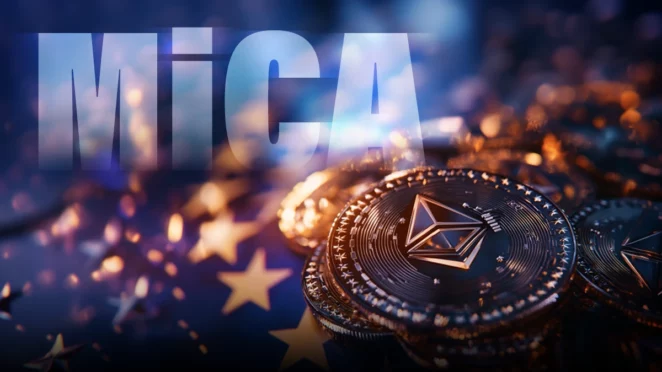
MiCA was adopted in 2023. Its transitional period ends July 1 2026. That is the date by which crypto asset service providers operating in the EU must hold full authorization or cease those activities. ESMA published its supervisory expectations in April 2026, and national regulators including France’s AMF have issued consumer warnings ahead of the deadline. The US took its own step forward on March 19 2026, when the SEC and CFTC released a joint interpretive framework. It defines jurisdictional boundaries between the two agencies, outlines which token types fall under securities law, and flags potential safe harbors. A broader ‘Regulation Crypto Assets’ rulemaking is expected to follow. These are no longer promises. They are published regulatory positions with compliance timelines attached.
Here’s how it compares to the US’ current crypto regulation:
- Unlike the SECs enforcement-driven approach, MiCA establishes a clear set of rules for crypto businesses to follow.
- It covers not only security tokens but also other types of digital assets, such as utility tokens and stablecoins.
- MiCA requires mandatory licensing for virtual asset service providers (VASPs). It sets clear requirements for capital and transparency, mandating that businesses publish whitepapers and disclose risks to investors. In contrast, the SEC requires businesses dealing with securities to undergo obligatory registration but lacks a comprehensive licensing structure and fails to provide clear guidelines.
- With the use of stablecoins growing annually, MiCA has established clear rules for stablecoin issuers, including mandatory reserves and external audits. Meanwhile, the US regulatory framework for stablecoins remains fragmented, leading to enforcement actions even against reputable projects like Paxos.
How the Three Major Regimes Compare
👉 Quick takeaway: The EU has the most complete statutory framework with MiCA fully in force and a hard July 1 2026 deadline. The US remains in a rulemaking phase with joint SEC/CFTC guidance but no single comprehensive law. The UK finalized its FCA rulebook in 2026 under the Crypto Roadmap, creating a third distinct regime operators must navigate separately.
| Dimension | US (SEC/CFTC 2026) | EU (MiCA) | UK (FCA 2026) |
|---|---|---|---|
| Framework Type | ⚠️ Joint interpretive guidance plus expected rulemaking |
🟢 Comprehensive statutory regulation 🏆 Most complete statutory framework |
🟢 Finalized rulebook under Crypto Roadmap |
| Licensing Requirement | Registration under securities law for covered assets; safe harbors under review | Mandatory CASP authorization for all in-scope service providers | FCA registration and authorization required |
| Stablecoin Rules | ⚠️ Fragmented; enforcement-driven | Mandatory reserves and audits for ART and EMT issuers | Specific rules under FCA regime |
| Transitional Deadline | ⚠️ Ongoing rulemaking; no single wind-down date |
🔴 July 1 2026 hard deadline 🔴 Most urgent compliance deadline in table |
⚠️ 2026 application timeline |
| Consumer Protection | Existing securities law disclosure requirements | ESMA and EBA consumer warnings; mandatory risk disclosures | FCA conduct rules apply |
| Best For |
US-domiciled issuers and platforms needing securities-law clarity 🏆 Best for US securities-law compliance path |
EU-based CASPs and stablecoin issuers 🏆 Most complete framework for EU operators |
UK-based firms and those targeting UK retail 🏆 Required path for UK retail market access |
If your business operates across more than one of these jurisdictions, the PwC Global Crypto Regulation Report 2026 maps compliance requirements across all three and more.
The UK’s Own Path: What the FCA Rulebook Means
The UK is not following MiCA. That is worth stating plainly. Post-Brexit, the FCA developed its own Crypto Roadmap and finalized a crypto-specific rulebook in 2026. The rules cover authorization requirements, conduct standards, and perimeter clarifications for firms targeting UK customers.
For businesses operating in both the EU and UK, this creates a dual compliance burden. MiCA authorization in an EU member state does not passport into the UK. Firms need separate FCA registration. That is a meaningful operational cost for any platform with cross-border ambitions.
For UK-based crypto holders, the practical effect is clearer conduct standards and stronger consumer protections from firms serving them. The FCA has been explicit that firms failing to meet its standards will not be permitted to operate in the UK market.
How Regulatory Clarity Could Change the Crypto Landscape
For businesses, the shift from enforcement-driven ambiguity to published rules is material. The SEC/CFTC joint guidance signals which token activities require registration and which may qualify for safe harbors. That is the difference between a legal team spending months on a securities-law opinion and knowing the answer in a day.
For retail holders, MiCA’s mandatory risk disclosures and reserve requirements for stablecoin issuers reduce the chance of holding an asset that collapses without warning. The ESMA and EBA consumer warnings issued ahead of the July 1 2026 deadline named specific risks that non-compliant providers pose. Clearer rules make those risks visible before a holder buys in.
For institutional investors, the joint US framework and MiCA together reduce the legal uncertainty that has kept many TradFi firms at arm’s length from crypto markets. When a pension fund’s compliance team can point to a published regulatory position, the conversation about allocation changes.
None of this means the regulatory picture is complete. DeFi remains largely outside current frameworks. Token classification is still being resolved. But the direction is set, and for the first time in years, businesses can plan around published rules rather than enforcement actions.
Token Classification and Safe Harbors: The Questions Still Being Resolved
The biggest remaining question in US crypto regulation is also the most consequential: is this token a security?
The SEC/CFTC joint framework published in March 2026 addresses this directly. It outlines which token characteristics push an asset toward securities classification and which do not. The guidance also signals the possibility of safe harbors for certain token types, though the specific parameters of those safe harbors are still being developed under the broader ‘Regulation Crypto Assets’ rulemaking process.
Under MiCA, the classification question is structured differently. The regulation distinguishes between three main categories. Asset-referenced tokens are backed by a basket of assets and face the strictest oversight, including mandatory reserve requirements and external audits. E-money tokens are pegged to a single fiat currency and treated similarly to electronic money under EU law. All other crypto assets, including utility tokens, fall into a general category with lighter requirements.
The practical stakes are high. A token classified as a security in the US requires full registration or an exemption. A token classified as an ART under MiCA requires its issuer to hold authorization and maintain audited reserves. Getting the classification wrong exposes issuers to enforcement action in both jurisdictions.
Which Rules Apply to You? A Simple Decision Framework
The right question is not which regime is strictest. It is which regime covers your specific activity. Work through these three questions.
- Where are you or your business based? If you are in an EU member state, MiCA applies. If you are in the UK, the FCA rulebook applies. If you are in the US and dealing in tokens that may be securities, the SEC/CFTC joint framework applies.
- What type of asset are you issuing or trading? Under MiCA, asset-referenced tokens and e-money tokens face the strictest requirements, including mandatory reserves and external audits. Utility tokens have lighter-touch rules. Under the US framework, the SEC/CFTC guidance clarifies which token types fall under securities law and which may qualify for safe harbors.
- Are you serving retail customers? Consumer-facing platforms face the highest disclosure and conduct obligations in all three regimes. ESMA and the EBA issued specific consumer warnings ahead of the July 1 2026 MiCA deadline. The FCA applies conduct standards to all authorized firms serving UK retail.
If you operate across borders, treat the strictest applicable regime as your baseline and layer on local requirements from there. The PwC Global Crypto Regulation Report 2026 provides a jurisdiction-by-jurisdiction compliance map for firms in this position.
What to Do Right Now
Regulatory clarity is not the same as regulatory simplicity. The rules are clearer. Acting on them still requires work. Here is where to start.
If you hold crypto as an individual in the EU: Check whether the platforms you use have obtained MiCA authorization. ESMA and the AMF have both warned that non-compliant providers must wind down or transfer client assets by July 1 2026. Using an unauthorized platform after that date puts your assets at risk.
If you operate or are building a crypto business in the EU: Full CASP authorization is required. The window to apply was tight. If your authorization is not in place, you need a wind-down or transfer plan. The ESMA statement from April 2026 sets out supervisory expectations in detail.
If you are a US-based issuer or platform: Read the SEC/CFTC joint interpretive guidance published March 19 2026. It is the most substantive US regulatory position on crypto assets to date. The follow-on rulemaking under S7-2026-09 will refine the framework further. Track it.
If you are building for a UK audience: FCA authorization is mandatory. MiCA passporting does not apply. Review the FCA’s Crypto Roadmap for the specific conduct standards that apply to your activity.
For a cross-jurisdictional view, the PwC Global Crypto Regulation Report 2026 is the most comprehensive public resource currently available.
Frequently Asked Questions
When does MiCA fully apply?
The MiCA transitional period ends July 1 2026. Crypto asset service providers operating in the EU without full authorization must wind down or transfer client assets by that date.
What did the SEC and CFTC actually publish in 2026?
On March 19 2026, the two agencies released a joint interpretive framework. It clarifies how US federal securities laws apply to crypto assets, defines jurisdictional boundaries between the SEC and CFTC, and signals potential safe harbors for certain token types. A follow-on rulemaking under S7-2026-09 is expected to develop the framework further.
Does MiCA apply in the UK?
No. The UK developed its own framework through the FCA’s Crypto Roadmap. The FCA finalized its crypto rulebook in 2026. MiCA authorization in an EU member state does not passport into the UK.
What is the difference between an ART and an EMT under MiCA?
Asset-referenced tokens are backed by a basket of assets and face the strictest MiCA requirements, including mandatory reserves and audits. E-money tokens are pegged to a single fiat currency and regulated similarly to electronic money under EU law.
Is DeFi covered by any of these frameworks?
Not substantially. DeFi remains largely outside current US, EU, and UK regulatory perimeters. All three regimes focus on identifiable service providers and issuers. Fully decentralized protocols with no central operator are not squarely addressed.
Kate

Kate is a blockchain specialist, enthusiast, and adopter, who loves writing about complex technologies and explaining them in simple words. Kate features regularly for Liquid Loans, plus Cointelegraph, Nomics, Cryptopay, ByBit and more.