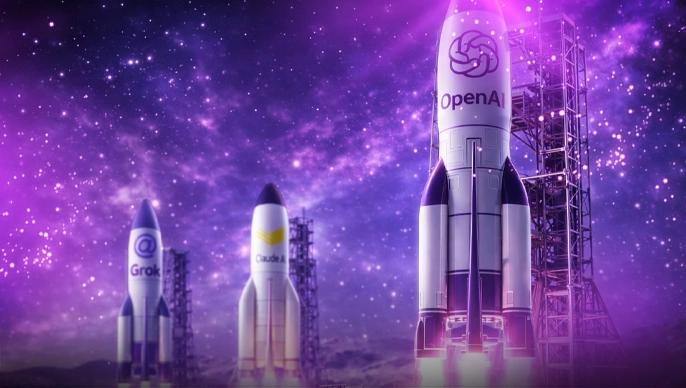

Leading AI companies like OpenAI are consolidating fast. They’re racing to become “too big to fail” monopolies. They want to position themselves as indispensable infrastructure. They’re doing it before regulators can intervene.
AI spending will hit $1.5 trillion by 2025. The window to build competitive alternatives is closing. Fast. Future breakups might become technically impossible.
This consolidation pattern isn’t new. We’ve seen it before with past tech monopolies. But the stakes are way higher now.
Social networks? Browsers? Users could abandon them. Theoretically, at least. AI’s different. AI models are embedding themselves into decision-making pipelines. Knowledge work. Software development. Legal services. Medical tasks.
These systems are becoming foundational economic infrastructure. Reversing their dominance may prove impossible. Industry observers are sounding the alarm.
The tech sector follows a predictable “regret cycle.” Facebook and Google showed us how it works. Early competition gives way to winner-takes-most consolidation. Network effects kick in. Capital advantages compound. Public alarm comes later. Too late. Switching costs have grown prohibitive by then. Legal tools prove inadequate.
The U.S. Department of Justice’s antitrust case against Google exemplifies this. Slow. Often toothless. That’s the regulatory response.
ChatGPT launched in 2022. AI entered hypergrowth. Now it’s racing through that same consolidation phase. Unprecedented speed.
The concentration of power carries unique risks. “AI monopolies will shape perception of reality, predict decisions, and become foundational economic infrastructure,” according to analysts examining the sector’s trajectory.
Control over these systems is concentrating. A handful of model providers. Backed by cloud and chip oligopolies. Lock-in at the infrastructure level itself.
Demand for decentralized alternatives exists. Brave and Signal each claim roughly 100 million users. Privacy-focused platforms. Linux dominates server infrastructure. DuckDuckGo processes billions of searches.
Decentralized AI projects have gained traction. Despite weaker user experience. Despite minimal marketing budgets.
But history suggests something grim. Late challengers require a decade or more to recover meaningful market share. Decentralized AI funding remains minuscule. Compare that to the capital flooding into centralized systems.
The lesson from previous tech monopolies is clear. “Failing to build parallel, open AI systems now could prove a fatal mistake,” according to industry analysts.
AI firms are positioned like pre-crisis banks. Systemically important. Potentially too large to regulate effectively.
This moment may represent the last realistic opportunity. competitive, decentralized alternatives now. Or the market structure becomes permanent.