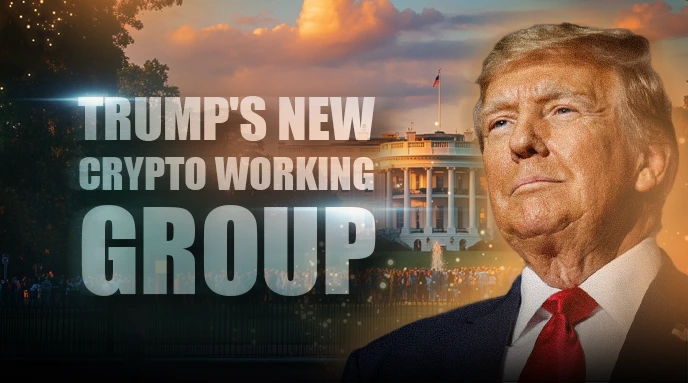
If you’re pro-crypto, you need to pay attention to this.
Trump’s first crypto executive order established the President’s Working Group for Digital Asset Markets — and this new think tank has the potential to elevate crypto to new heights, or sink it to new lows.
It’s up to all of us, as people who believe in the vision of crypto, to monitor this group and make sure it keeps crypto’s best interests at heart.
How do we start? By rounding up everything we know so far.
What is the President’s Working Group on Digital Asset Markets?
The President’s Working Group on Digital Asset Markets was created by executive order on January 23, 2025. It is an executive-branch regulatory coordination body, not an advisory think tank. Its mandate is to modernize U.S. financial regulation for digital assets, with authority to direct multi-agency action across Treasury, the CFTC, the SEC, and other departments.
This group is led by a special advisor for AI and Crypto and includes big shots from different government departments, such as the Treasury, Justice Department, and others money, law, and security authorities.
Their job is to check out the current rules around digital currencies and suggest any changes to make sure these rules help innovation, protect users, and maintain the strength of the US dollar. They’re also exploring the idea of creating a governmental stockpile of digital assets.
Importantly, this group is working on setting up new guidelines for how digital currencies should be managed, making sure they’re safe for people to use and that they don’t mess with the country’s financial stability.
To do so, they’ll be talking to experts and the public to get a wide range of opinions to help shape their recommendations.
Timeline: How the Working Group’s Policy Has Evolved
- January 23, 2025 — Trump signs the executive order establishing the President’s Working Group on Digital Asset Markets. David Sacks named AI and Crypto Czar. The order tasks the group with drafting digital asset regulations and studying a national crypto stockpile.
- March 2025 — White House and regulatory agencies begin formal discussions on the national digital asset reserve concept. No reserve created; discussions remain exploratory.
- July 2025 — GENIUS Act signed into law. First federal stablecoin framework in U.S. history. Issuers must maintain 1:1 dollar reserves.
- July 30, 2025 — White House releases formal Working Group recommendations. Six pillars: CFTC jurisdiction expansion, custody rule clarification, regulatory sandboxes, crypto banking relaunch, dollar-backed stablecoin promotion, and AML/CFT modernization. CFTC Acting Chairman Caroline Pham publicly endorses the framework.
New Crypto Goals in the US
The order gives the working group two main tasks: first, to work on making rules for how digital currencies, like stablecoins, are issued and used in the US.
Second, to study the feasibility of a national digital asset stockpile, seeded with crypto already seized by federal law enforcement. No stockpile was created by the executive order itself. The order directed the Working Group to evaluate the concept and report back. That distinction matters: early headlines suggested an immediate reserve, but Axios confirmed at the time that no Bitcoin stockpile had been established.
As of the Working Group’s July 2025 recommendations, the stockpile question remained an ongoing policy consideration rather than a finalized program.
What the Working Group Actually Recommended (July 2025)
On July 30, 2025, the White House released the Working Group’s formal recommendations. Six pillars define the roadmap.
- Expand CFTC jurisdiction. The recommendations call for the CFTC to take primary oversight of spot markets for non-security digital assets. This is a major jurisdictional shift away from the SEC for most tokens.
- Clarify custody and trading rules. Exchanges and custodians need clear guidance on how to hold client assets. The Working Group recommends written rules replacing the informal enforcement approach of prior years.
- Enable regulatory sandboxes. Companies can apply to test new crypto products under regulatory supervision before full compliance requirements kick in. This is a direct lifeline for early-stage DeFi and fintech projects.
- Relaunch crypto innovation in banking. The recommendations push banking regulators to revisit restrictions that effectively blocked banks from offering crypto custody or settlement services.
- Promote U.S. dollar-backed stablecoins. This pillar ties directly to the GENIUS Act. The goal is to make U.S.-issued stablecoins the dominant global standard.
- Modernize AML and CFT rules. Anti-money-laundering and counter-financing-of-terrorism rules will be updated to fit digital asset realities, including DeFi protocols and self-custody wallets.
Who’s in President Trump’s Working Group?
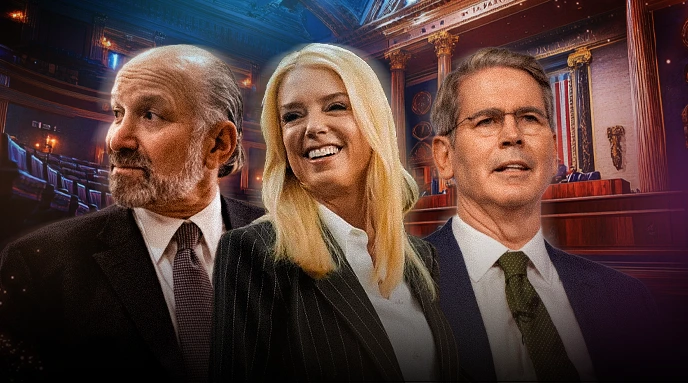
The new working group, the President’s Group on Digital Asset Markets, includes several high-ranking officials from across the U.S. government, specifically:
- Special Advisor for AI and Crypto (Chair): David Sacks. He was named AI and Crypto Czar on January 23, 2025, the same day Trump signed the executive order.
- Treasury: Scott Bessent.
- The Attorney General: Pam Bondi.
- Commerce: Howard Lutnick.
- Homeland Security: Kristi Noem.
- Management and Budget: Matthew Vaeth.
- National Security Affairs: Michael Waltz.
- National Economic Policy: Kevin Hassett.
- Science and Technology: David Sacks.
- The Homeland Security Advisor: Stephen Miller.
- Securities and Exchange Commission: Mark Uyeda.
- Commodity Futures Trading Commission: Caroline Pham.
Additionally, the chair can invite heads of other executive departments and agencies or senior officials from the Executive Office of the President to attend meetings when needed.
The Special Advisor for AI and Crypto
David Sacks chairs the Working Group. He’s a venture capitalist and co-founder of Craft Ventures, a longtime advocate for Bitcoin and crypto deregulation, and a close ally of Elon Musk. Trump named him AI and Crypto Czar on January 23, 2025. His formal responsibilities as chair include setting the group’s agenda, coordinating multi-agency activities, liaising with private-sector stakeholders, and reporting recommendations directly to the President.
He is also responsible for overseeing development of the federal regulatory framework for digital assets. Sacks has publicly stated his priority is ending what he calls ‘regulation by enforcement’ and replacing it with clear, written rules. That stance has significant implications for DeFi platforms, stablecoin issuers, and crypto exchanges operating in the U.S.
Trump vs. Biden Crypto Policy
The article already draws a contrast with the Biden era. Here is that contrast in concrete terms.
👉 Quick takeaway: The Biden administration took an enforcement-first approach that discouraged crypto banking and produced no federal stablecoin law. The Trump administration replaced that posture with written rulemaking, signed the GENIUS Act in July 2025, and directed a feasibility study on a national crypto reserve.
| Policy Area | Biden Administration | Trump Administration |
|---|---|---|
| Stablecoin Framework | ⚠️ Risk-containment focus; no federal law passed |
🟢 GENIUS Act signed into law, July 2025 🏆 First federal stablecoin law |
| Regulatory Approach | 🔴 SEC enforcement-led; Operation Choke Point 2.0 | 🟢 Written rules replacing enforcement; CFTC expansion |
| Crypto in Banking | 🔴 Banks discouraged from offering crypto services | 🟢 Working Group recommends reopening crypto banking |
| DeFi | ⚠️ No formal framework; enforcement exposure | 🟢 Regulatory sandboxes proposed for DeFi experimentation |
| National Reserve | ⚠️ No proposal | 🟢 Feasibility study directed; ongoing policy consideration |
| AML / CFT Rules | ⚠️ Existing rules applied to crypto without update | 🟢 Formal modernization recommended for digital assets |
| Overall Posture | 🔴 Skeptical; contain and regulate |
🟢 Pro-growth; lead and compete globally 🏆 Most permissive U.S. crypto posture on record |
The shift is not just rhetorical. The GENIUS Act and the CFTC jurisdiction expansion represent concrete legal changes, not just executive preference.
The GENIUS Act: America’s First Federal Stablecoin Law
The Working Group’s stablecoin mandate produced real legislation. In July 2025, the GENIUS Act was signed into law — the first federal regulatory framework for stablecoins in U.S. history.
Here is what the law covers:
- Issuer requirements: Stablecoin issuers must maintain 1:1 reserves in U.S. dollars or equivalent liquid assets.
- Federal oversight: Treasury and banking regulators are directed to implement the framework expeditiously.
- Dollar dominance: The law explicitly promotes U.S. dollar-backed stablecoins globally, aligning with the executive order’s original language.
- Cross-border payments: The framework addresses international stablecoin use, with implications for remittances and global dollar settlement.
For stablecoin users and issuers, this is the most consequential outcome of the Working Group so far. It moves the conversation from ‘what might happen’ to ‘here is the law.’
Frequently Asked Questions
Has the U.S. government actually created a national crypto stockpile?
No. The January 2025 executive order directed the Working Group to study the feasibility of a national digital asset stockpile using crypto seized by federal law enforcement. No stockpile has been formally established as of the Working Group’s July 2025 recommendations.
What is the GENIUS Act?
The GENIUS Act is the first federal law in U.S. history to create a regulatory framework specifically for stablecoins. Signed in July 2025, it requires issuers to maintain 1:1 dollar reserves and gives Treasury and banking regulators authority to implement and enforce the rules.
What role does the CFTC play under the new framework?
The Working Group’s July 2025 recommendations call for the CFTC to take primary oversight of spot markets for digital assets that are not classified as securities. This is a significant shift from the SEC-dominant enforcement environment of the Biden years.
Does any of this affect DeFi?
Yes. The recommendations include regulatory sandboxes specifically designed for DeFi experimentation. DeFi protocols would be able to apply for supervised testing environments before full compliance requirements apply. AML and CFT rule modernization also targets DeFi self-custody scenarios.
Who actually leads the Working Group?
David Sacks, the venture capitalist named as AI and Crypto Czar by Trump on January 23, 2025. He chairs the group and reports recommendations directly to the President.
What to Watch Next
The Working Group has moved from study to recommendation. The next phase is implementation. Here are the three things worth tracking.
First, CFTC rulemaking. The expanded jurisdiction over spot markets for non-security digital assets requires the CFTC to write and finalize new rules. That process takes months and involves public comment periods. Watch for proposed rules from the CFTC in late 2025 and into 2026.
Second, GENIUS Act enforcement. Treasury and banking regulators are directed to implement the stablecoin framework expeditiously. What counts as a compliant reserve, and who audits it, will be defined in the coming regulatory guidance.
Third, the stockpile decision. The feasibility study on a national digital asset reserve has no published deadline. If the administration moves forward, expect a separate executive action or congressional proposal.
The regulatory framework for crypto in the U.S. is being written right now. The Working Group’s July 2025 recommendations are the clearest signal yet of where it is heading.
Connor

Connor is a US-based digital marketer and writer. He has a diverse military and academic background, but developed a passion over the years for blockchain and DeFi because of their potential to provide censorship resistance and financial freedom. Connor is dedicated to educating and inspiring others in the space, and is an active member and investor in the Ethereum, Hex, and PulseChain communities.